
East Asian, South Asian, Chinese and Indian Students in Aotearoa: A Youth19 Report

Summary:

The Youth19 report highlights that while most Asian students feel positive about school, they face significant challenges, including ethnic discrimination, mental distress, and barriers to healthcare. It emphasizes the necessity of disaggregating “Asian” data into specific ethnic groups to create targeted health strategies and interventions for diverse communities.
Psychology of Sexual Orientation and Gender Diversity: Push and Pull Factors for Transgender Migration to Aotearoa/New Zealand

This research draws on data from the 2022 Counting Ourselves survey to examine the push and pull factors influencing transgender migrants to come to Aotearoa New Zealand. Transgender participants who independently chose to migrate were drawn by the country’s reputation for embracing trans identities and offering greater openness around gender. Those from the Global South, recent migrants, and people on temporary visas were more likely to migrate to Aotearoa due to escalating threats in their home countries. A media report on the study can be found on Stuff

Cross-cultural Adaptations of Mental Health Screening Tools: A Scoping Review

Summary

This review examines how mental health assessment tools are culturally adapted for different contexts. Most studies occurred in the Eastern Mediterranean, Europe, and Western Pacific, adapting tools into 31 languages. Few adaptations exist in Africa and Latin America, highlighting an evidence gap and the need for more rigorous, guideline-based research.

Inequities in Adolescent Sleep Health in Aotearoa New Zealand: Cross-sectional survey findings

Summary

Aotearoa New Zealand adolescents experience significant ethnic inequities in sleep health. Māori, Pacific, Asian, MELAA, and ‘Other’ ethnic groups were more likely than European peers to have short sleep, late bedtimes, and early waketimes on school days. Factors such as rurality, neighbourhood and school deprivation, housing insecurity, unsafe environments, and experiences of racism partially explained these differences but did not fully account for them. These findings highlight the role of social determinants and systemic inequities in adolescent sleep. Addressing racism and colonial legacies is essential to ensure all young people can achieve the basic human right of good sleep and well-being.

Find the paper HERE

Utilisation of Specialist Mental Health and Addiction Services in New Zealand: a comparative analysis of refugees with the general population

Summary

A national study using NZ data found that quota refugees accessed mental health services more often than other refugee groups, mainly through NGOs. Women and those in deprived areas had higher service use. Findings highlight the need to improve early access for all refugee and asylum seeker groups.

Ethnic identification from pre-birth to early adolescence: longitudinal patterns and methodological considerations

Summary

Ethnicity is a dynamic construct that can change over an individual’s lifetime. This study examines ethnic identification from pre-birth to early adolescence in a New Zealand cohort, finding significant variation depending on the classification method used. The proportion of individuals with stable ethnic identification across five data waves ranged from 39% to 83%. These findings underscore the need for researchers to treat ethnicity as a time-varying variable and to carefully consider their classification decisions.

Evaluation Of the Afghan Evacuee Resettlement Programme In Aotearoa New Zealand

Aotearoa New Zealand resettled over 1,700 Afghan evacuees after the 2021 Taliban takeover. NFACT supported 1,478 arrivals with culturally tailored, community-led services addressing health, education, employment, and wellbeing. Using Māori wellness models, NFACT fostered belonging and resilience, helping evacuees integrate while highlighting effective humanitarian resettlement approaches.

A Mixed-Methods Evaluation of the Afghan Evacuee Resettlement Programme in Aotearoa New Zealand

Summary

In 2021, over 1,700 Afghan evacuees resettled in New Zealand received tailored support from NFACT. A mixed-methods evaluation found high satisfaction, with evacuees praising guidance and staff commitment despite limited resources. Findings highlight the importance of culturally sensitive, sustainable resettlement programmes to support integration and humanitarian responses.

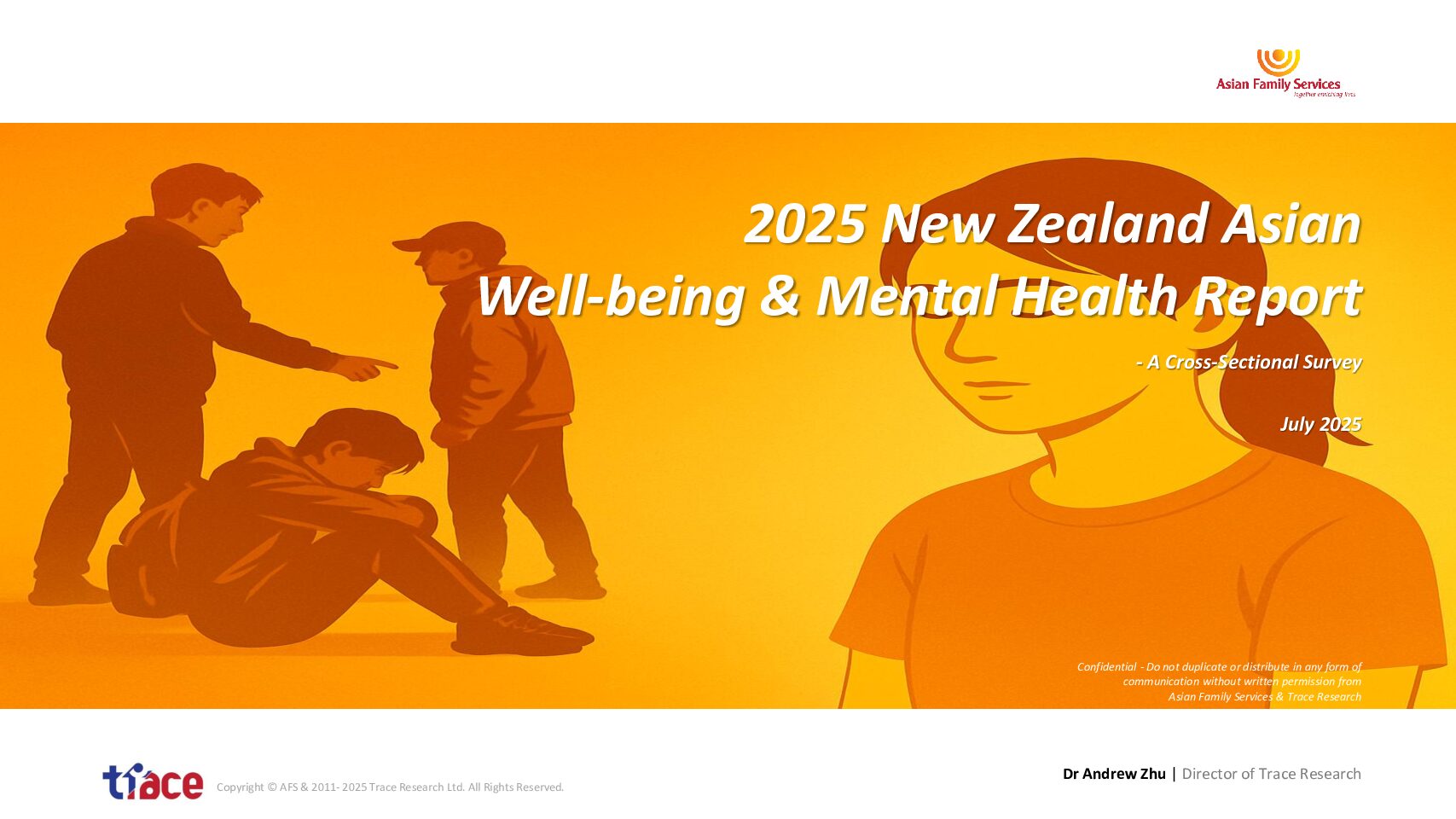
2025 New Zealand Asian Well-being & Mental Health Report

The 2025 survey aims to provide detailed insights into the mental health and well-being of Asian communities in New Zealand, highlighting disparities, discrimination, and barriers to care. Findings will inform culturally responsive services, support policy development, and improve outcomes through targeted, evidence-based interventions across diverse Asian subgroups.

Latin American Refugees and Immigrants in New Zealand: The Impact of Migration Status on Quality of Life

This study explores how Latin American refugees and immigrants perceive their quality of life in New Zealand, highlighting key challenges like discrimination, language barriers, mental health, and isolation. Despite these, many report satisfaction. It also examines New Zealanders’ perceptions and offers recommendations for future research on migrant well-being.